Grid Ready Forum 2026: 60 experts formulate key recommendations to fast-track action on biomethane grid injection across Europe
08.04.2026Brussels, 8 April 2026 — A group of 60 experts attending the second edition of the Grid Ready Forum today in Brussels has put forward concrete measures to accelerate biomethane injection into Europe’s gas grids. Delays in implementing EU gas rules risk slowing the rollout of biomethane at a time when the rapid expansion of domestic, renewable gas supply is strategically critical for global competitiveness and defossilisation.
- Multiple Member States likely to lag behind on Gas Package implementation ahead of the 5 August deadline, delaying injection of biomethane into gas grids.
- Experts recommend urgent regulatory fixes to remove barriers and unlock cost-effective biomethane injection using extensive gas network already in place.
- 2nd edition of Grid Ready Forum highlights need for stronger coordination, harmonisation, and faster action across Europe.
Brussels, 8 April 2026 — A group of 60 experts attending the second edition of the Grid Ready Forum today in Brussels has put forward concrete measures to accelerate biomethane injection into Europe’s gas grids. Delays in implementing EU gas rules risk slowing the rollout of biomethane at a time when the rapid expansion of domestic, renewable gas supply is strategically critical for global competitiveness and defossilisation.
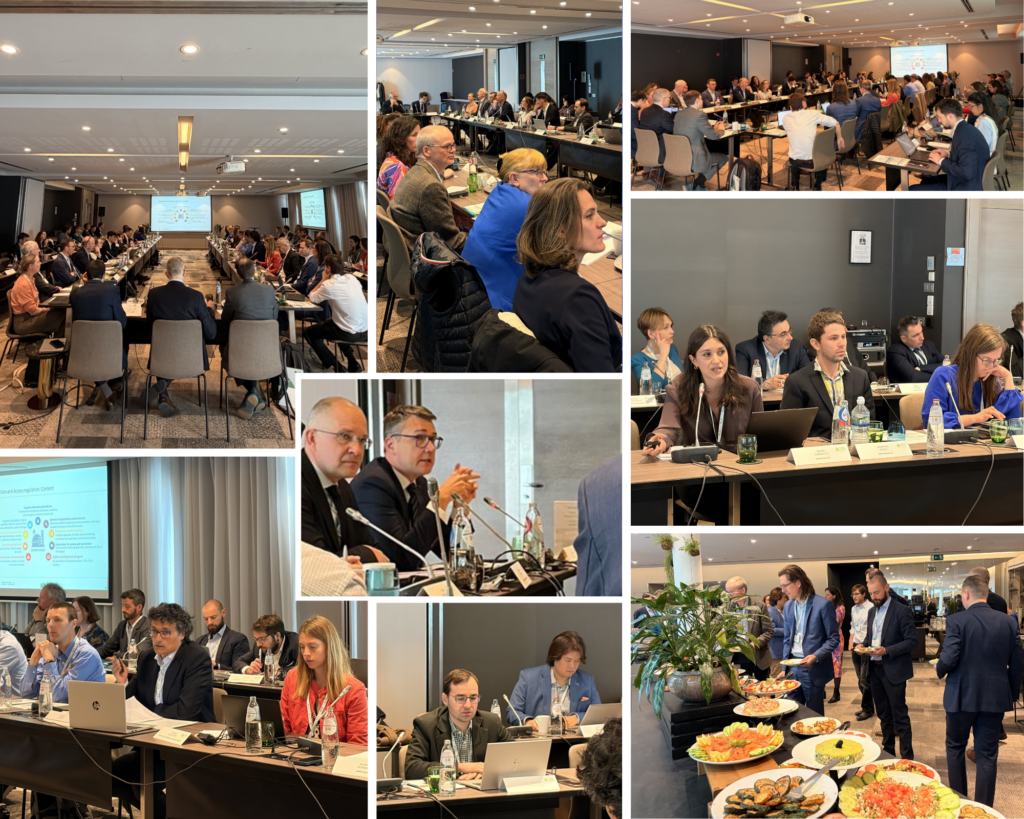
A high-level group of EU policymakers, national regulators, grid operators and industry representatives gathered today behind closed doors in a meeting hosted by the European Biogas Association to address the bottlenecks holding back biomethane deployment. Participants from multiple EU countries flagged persistent regulatory fragmentation and technical barriers that continue to hinder the injection of renewable gas into Europe’s energy system.
The discussions come at a critical moment for the implementation of the EU Gas Package, calling on Member States to establish a right to injection for all into existing gas grids for all renewable gas producers . With the transposition deadline set for 5 August, several EU countries are expected to delay or fall short on biomethane-related provisions, while the European Commission is preparing an assessment of progress likely to be released later this year.
Produced domestically and compatible with existing gas infrastructure, biomethane offers the fastest and most cost-efficient option to expand renewable gas supply and strengthen resilience in a tense geopolitical environment.
According to ACER, Europe’s gas network already provides a vast, high-value backbone for energy transport and storage, with over 200,000 km of transmission pipelines and more than 2 million km of distribution lines. A recent study by GIE estimated in €2.5 bn/year the needed investment in gas grids to integrate 1,000 TWh of biomethane. This is 40 times less than the electricity grids need up to 2040 (€100 billion/year).
The Forum concluded with a set of recommendations aimed at breaking existing bottlenecks to facilitate grid injection as one of the necessary steps to accelerate the rollout out biomethane. Among those, the need for a pragmatic and harmonized approach to gas quality standards, including oxygen limits, which can make biomethane injection unnecessarily expensive or even technically unfeasible. Different countries have implemented separate national standards, resulting in different oxygen level requirements between countries that pose a challenge for cross border flows.
Additionally, the development of coordinated “masterplans” for gas grids to maximise biomethane injection, supported by digital mapping tools that enable grid operators to optimise their networks, including by implementing reverse flows where relevant. This would support the implementation of the right to injection for biomethane producers established in the Gas Package.
Innovative solutions are also gaining traction. Virtual pipelines, transporting biomethane by road where grid access is limited, were highlighted as a practical workaround, with experts urging policymakers to allow grid operators to cover most of the cost of the centralised injection points.
“Europe has the infrastructure, the technology, and the expertise to scale up biomethane quickly,” said Harmen Dekker, EBA’s CEO. “What we need now is decisive action from governments and regulators to remove remaining barriers, harmonise rules, and turn potential into tangible renewable energy that strengthens Europe’s energy security and accelerates defossilisation.”
MORE DETAILS AND CONCLUSIONS OF 2026 EDITION
Note for editors
About the Grid Ready Forum: The Grid Read Forum has been conceived as a high-level platform to advance biomethane injection and support the rollout of renewable gas in Europe. The Forum brings together infrastructure companies, regulators, member state representatives and stakeholders of the sector and is initiated by the European Biogas Association. Through collaboration and the sharing of best practices, the Forum aims to support the transition to a sustainable and integrated energy system in line with EU climate goals.
About biogas and biomethane (biogases): Biogas is produced from the decomposition of organic materials. These residues are placed in a biogas digester in the absence of oxygen. With the help of a range of bacteria, organic matter breaks down, releasing a blend of gases: 45 – 85 vol% methane (CH4) and 25 – 50 vol% carbon dioxide (CO2). The output is a renewable gas which can be used for multiple applications. Biomethane – purified biogas – is a renewable alternative to natural gas. Its multiple applications include heat and power supply for our buildings and industries, and renewable fuel production for the transport sector.
Impact of biogases beyond energy: Beyond energy, biogas plants operate as modern biorefineries, transforming waste into high-value products that directly strengthen the EU bioeconomy. Biomethane can be converted into hydrogen, methanol, or syngas for bio-based chemicals and plastics, reducing reliance on imported fossil fuels. Digestate, as a nutrient-rich co-product, can be processed into bio-fertilisers, improving soil health, supporting food security, and replacing fossil-based alternatives. Likewise, biogenic CO2 can be captured for industrial uses, including e-fuels, greenhouses, food and beverage production. By generating multiple circular products alongside renewable energy, biogas systems create a low-carbon, resource-efficient value chain that boosts industrial competitiveness and advances Europe’s circular bioeconomy.
Contact: Ángela Sainz Arnau, EBA Communications Director sainz@europeanbiogas.eu