Policy gaps hold back biomethane scale-up despite available potential and geopolitical momentum, report finds
06.05.2026Brussels, 22 April 2026 — Biomethane can help shield Europe from fossil fuel shocks, but current policy momentum remains insufficient to scale them at the required pace. As the European Commission publishes its Accelerate EU communication today, a new report highlights both the strategic value of biomethane and the gap between ambition and implementation.
Europe’s exposure to global energy markets continues to carry a high cost. According to the European Commission, the EU spent €336.7 billion on energy imports in 2025, with an additional €22 billion linked to recent geopolitical tensions, underlining the urgency of accelerating domestic renewable energy solutions.
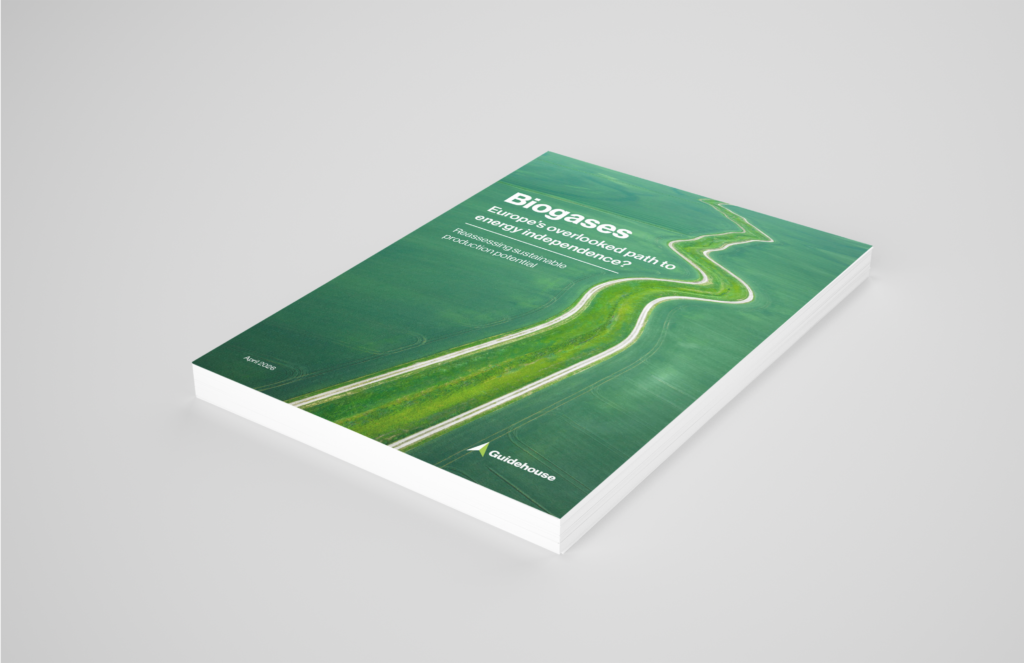
The report launched today provides an updated assessment of Europe’s realistic and sustainable biomethane potential. It reinforces the conclusions of earlier studies that biomethane has a central role to play in building a defossilised and more resilient energy system.
Nevertheless, the potential estimate for 2030 has been lowered compared to previous assessments, reflecting not a reduction in sustainable potential, but a lack of timely action to deploy projects and mobilise available feedstocks.
“Europe has the resources to scale up biomethane, but deployment is being held back by persistent regulatory barriers,” said Harmen Dekker, CEO of the European Biogas Association. “Without a stable and coherent policy framework, the sector cannot scale at the pace required to deliver on Europe’s energy and climate objectives.”
Production today remains below what is achievable with existing resources. Around 22 bcm of biogases are currently produced in Europe, of which 5 bcm is biomethane, with output almost entirely based on anaerobic digestion.
The report estimates total biomethane potential at 34–35 bcm by 2030 (EU-27 + UK, NO, CH, largely from agricultural residues (25%), animal manure (23%), sequential crops (19%) and industrial wastewater (15%), together representing 81% of the total. Around 60% of this potential is concentrated in Germany, France, Italy, Poland and the United Kingdom.
The long-term outlook confirms a significant scaling opportunity. Production potential is projected to increase to 116–132 bcm by 2040 and up to 205 bcm by 2050, reinforcing the role of biomethane in a future defossilised energy system.
With the right conditions in place, Europe holds a significant and sustainable resource that can deliver a domestic source of renewable energy, strengthen resilience to external shocks, and contribute meaningfully to Europe’s long-term energy independence.
Download the full report here.
ENDS
Note for editors
About the study: This study revisits and updates the 2024 Guidehouse estimated biomethane potentials, based on the latest data and market and regulatory insights. The underlying methodology remains consistent with the previous report to enable direct comparison. Potential numbers expressed in the report cover both biogas and biomethane and are expressed in billion cubic meters of biomethane-equivalent. Volumes are converted into bcm based on the energy content of biomethane in both gases, so they can be directly compared and added together. The core potential estimate focuses on feedstocks that are well suited for anaerobic digestion. Many of the feedstocks are wastes and residues that already exist in significant volume across Europe. However, collection, channelling towards biomethane production, and rollout of sufficient production capacity remain a challenge. Additionally, this study quantifies the potential from feedstocks grown on marginal and contaminated lands, as well as from biogenic carbon dioxide (CO2).
About biogas and biomethane (biogases): Biogas is produced from the decomposition of organic materials. These residues are placed in a biogas digester in the absence of oxygen. With the help of a range of bacteria, organic matter breaks down, releasing a blend of gases: 45 – 85 vol% methane (CH4) and 25 – 50 vol% carbon dioxide (CO2). The output is a renewable gas which can be used for multiple applications. Biomethane – purified biogas – is a renewable alternative to natural gas. Its multiple applications include heat and power supply for our buildings and industries, and renewable fuel production for the transport sector.
Impact of biogases beyond energy: Beyond energy, biogas plants operate as modern biorefineries, transforming waste into high-value products that directly strengthen the EU bioeconomy. Biomethane can be converted into hydrogen, methanol, or syngas for bio-based chemicals and plastics, reducing reliance on imported fossil fuels. Digestate, as a nutrient-rich co-product, can be processed into bio-fertilisers, improving soil health, supporting food security, and replacing fossil-based alternatives. Likewise, biogenic CO2 can be captured for industrial uses, including e-fuels, greenhouses, food and beverage production. By generating multiple circular products alongside renewable energy, biogas systems create a low-carbon, resource-efficient value chain that boosts industrial competitiveness and advances Europe’s circular bioeconomy.
Contact
Ángela Sainz Arnau, EBA Communications Director sainz@europeanbiogas.eu